
Sermons

Home Sermons

sermon date 2017-04-23
sermon manager Ahmad Doe
sermon location India

Drinking from the Fountain of Living Water

Scripture Reference: John 4:14 (KJV) — “But whosoever drinketh of the water that I shall give him shall never thirst; but the water that I shall give him shall be in him a well of water springing up into everlasting life.”


Introduction: The Source that Satisfies

Beloved, today we gather to meditate on one of the most powerful promises of Jesus Christ: His offer of living water. In John 4:14, Jesus declares, “Whosoever drinketh of the water that I shall give him shall never thirst.” What a profound and life-changing invitation! This promise was made to a Samaritan woman at Jacob’s well, but it echoes through the ages to us today. Jesus offers us something far greater than natural water — He offers us living water that satisfies the deepest longings of our souls and springs up into everlasting life.

Water is essential for life. It quenches thirst, sustains the body, and refreshes the weary. Yet, no matter how much water we drink, our physical thirst always returns. Jesus uses this everyday reality to illustrate a profound spiritual truth: there is a thirst within each of us that nothing in this world can quench. Money cannot satisfy it. Success cannot fill it. Relationships cannot sustain it. Only the living water that Jesus gives can quench the thirst of the soul and lead us to eternal life.

Today, we will unpack the promise of living water. We will explore its source, its nature, and its impact on our lives. We will examine three key aspects:

  1. The Source of Living Water: Who is Jesus in the context of this promise?
  2. The Nature of Living Water: What does it mean to receive and experience it?
  3. The Overflow of Living Water: How does it transform our lives and impact others?

Let us drink deeply from this truth, for it has the power to renew, restore, and revive our spirits.


I. The Source of Living Water: Jesus, the Fountain of Life

When Jesus spoke to the Samaritan woman at the well, He identified Himself as the source of living water. He was not referring to the physical water in the well, but to the spiritual life and sustenance that flows from Him. To understand the significance of this, we must first understand who Jesus is and why He alone can offer this living water.

1. Jesus as the Son of God

In John 1:1-4, we read, “In the beginning was the Word, and the Word was with God, and the Word was God… In him was life; and the life was the light of men.” Jesus is the eternal Word, the Creator, and the sustainer of all life. As the Son of God, He is the only one who can offer water that leads to eternal life because He is the source of life itself.

2. Jesus as the Savior of the World

The Samaritan woman was an outcast, both socially and spiritually. Yet Jesus crossed cultural and societal barriers to meet her at the well. This encounter reveals His heart for the lost, the broken, and the thirsty. In John 3:16, we are reminded, “For God so loved the world, that he gave his only begotten Son, that whosoever believeth in him should not perish, but have everlasting life.” Jesus offers living water to all who come to Him in faith, regardless of their past or present condition.

3. Jesus as the Fulfillment of Scripture

Throughout the Old Testament, water is a symbol of God’s provision and salvation. Isaiah 12:3 says, “Therefore with joy shall ye draw water out of the wells of salvation.” Jesus fulfills this imagery by offering Himself as the wellspring of salvation. He is the fulfillment of every promise, the answer to every longing, and the source of every blessing.


II. The Nature of Living Water: A Well That Never Runs Dry

Jesus described the water He gives as a well of water springing up into everlasting life. This is not ordinary water; it is living water, and it carries unique qualities that set it apart from anything this world can offer.

1. It Satisfies the Deepest Thirst

Physical water can quench physical thirst, but it cannot satisfy the spiritual thirst of the soul. Jesus’ living water goes beyond surface-level needs; it reaches the depths of our being. Psalm 42:1 says, “As the hart panteth after the water brooks, so panteth my soul after thee, O God.” This thirst for God is universal, and only His living water can truly satisfy.

2. It Springs Up Into Everlasting Life

The living water that Jesus offers is not stagnant or temporary; it is dynamic and eternal. It springs up, constantly renewing and refreshing the believer. This speaks of the work of the Holy Spirit, who indwells us and empowers us to live abundant lives. In John 7:38-39, Jesus said, “He that believeth on me, as the scripture hath said, out of his belly shall flow rivers of living water. (But this spake he of the Spirit…)”

3. It Transforms from the Inside Out

The living water Jesus gives is not external; it is internal. It becomes a well within us, changing our hearts, renewing our minds, and aligning our desires with God’s will. Ezekiel 36:26-27 describes this transformation: “A new heart also will I give you, and a new spirit will I put within you… And I will put my spirit within you.”


III. The Overflow of Living Water: A Life That Impacts Others

When we drink of the living water that Jesus gives, it does not end with us. It overflows, impacting every aspect of our lives and the lives of those around us. Let us consider three ways in which this overflow manifests.

1. It Brings Joy and Peace

Isaiah 55:12 says, “For ye shall go out with joy, and be led forth with peace.” The living water of Jesus fills us with a joy and peace that surpasses understanding. This joy is not dependent on circumstances; it is rooted in the assurance of His presence and His promises.

2. It Inspires Witness and Evangelism

The Samaritan woman’s encounter with Jesus did not end at the well. She ran back to her village and said, “Come, see a man, which told me all things that ever I did: is not this the Christ?” (John 4:29). Her testimony led many to believe in Jesus. When we experience His living water, we cannot keep it to ourselves. We become conduits of His grace, sharing the good news with others.

3. It Empowers Service and Ministry

The overflow of living water equips us to serve others. Whether through acts of kindness, words of encouragement, or prayers of intercession, we become vessels of God’s love and instruments of His purpose. Galatians 6:10 reminds us, “As we have therefore opportunity, let us do good unto all men, especially unto them who are of the household of faith.”


Application: Steps to Drink from the Fountain of Living Water

  1. Recognize Your Thirst:
    • Admit your need for Jesus and the living water He provides. Acknowledge that nothing in this world can satisfy your soul.
  2. Come to the Source:
    • Approach Jesus in faith and humility. Accept His invitation to drink freely from the well of salvation.
  3. Receive the Holy Spirit:
    • Allow the Holy Spirit to fill and empower you. Surrender every area of your life to His guidance and transformation.
  4. Share the Overflow:
    • Let the living water within you flow out to bless others. Be a light in your community and a witness to the world.

Conclusion: A Call to the Well

Beloved, the invitation is clear: Jesus offers living water to all who will come to Him. Will you drink deeply from His fountain today? Will you allow His living water to satisfy your thirst, renew your spirit, and transform your life?

No matter how parched or weary you may feel, His water is sufficient. No matter how far you may have wandered, His well is open to you. Let us come to Jesus, the fountain of living water, and find in Him the satisfaction, joy, and life we so desperately need.

Prayer: Heavenly Father, we thank You for the gift of living water that flows through Jesus Christ. Help us to drink deeply from this fountain, to be filled with Your Spirit, and to overflow with Your love and grace. May our lives be a testimony of Your goodness and a reflection of Your light. In Jesus’ name, we pray. Amen.


 

Read More →
sermon date 2017-04-21
sermon manager John Doe
sermon location Germany

Embracing the Light of the World

Scripture Reference: John 8:12 (KJV) — “Then spake Jesus again unto them, saying, I am the light of the world: he that followeth me shall not walk in darkness, but shall have the light of life.”


Introduction: The Light that Transforms

Family, today, I want us to anchor our hearts and spirits on one of the most profound declarations that Jesus made during His earthly ministry: “I am the light of the world.” This statement is not just a metaphor or a poetic phrase; it is a proclamation of divine identity and an invitation to divine relationship. Jesus was not merely saying that He has light or that He shows light; He was declaring that He IS the light — the source, the essence, and the sustainer of all light, both in the natural and in the spiritual.

Now, let’s imagine the context of this statement. It was made during the Feast of Tabernacles, a time when great lamps were lit in the temple courtyard to commemorate how God guided Israel with a pillar of fire during their wilderness journey. Amidst this radiant celebration, Jesus stood up and boldly declared, “I am the light of the world.” He was essentially saying, “What you celebrate symbolically, I embody personally.” He is the fulfillment of the promise, the guide for our journey, and the very presence of God in our lives.

Today, we will unpack this declaration in depth. We will explore its significance, its implications, and how we, as followers of Christ, can walk in the fullness of His light. We will examine three key aspects:

  1. The Power of Light: What does it mean that Jesus is the light?
  2. Walking in the Light: How do we live daily under His guidance?
  3. The Promise of Life: What is the result of embracing His light?

Let us dive deeply into this truth, for it has the power to transform not only our perspective but also our destiny.


I. The Power of Light: Jesus as the Light of the World

When Jesus said, “I am the light of the world,” He was making a statement about His divine nature and His role in the lives of humanity. Light, both scientifically and symbolically, carries profound meaning. Let’s consider the characteristics of light and how they reflect the nature of Jesus.

1. Light Dispels Darkness

Darkness is not a substance; it is simply the absence of light. Similarly, spiritual darkness is the absence of God’s presence and truth. In a world plagued by sin, confusion, and despair, Jesus came to dispel the darkness. When His light shines, fear must flee, ignorance is illuminated, and evil is exposed.

In John 1:5, we read, “And the light shineth in darkness; and the darkness comprehended it not.” This means that the darkness could not overpower or extinguish His light. No matter how deep the darkness in your life may seem, it cannot withstand the power of Christ’s light.

2. Light Reveals Truth

Have you ever tried navigating a dark room? You stumble, you hesitate, and you feel uncertain. But when the light comes on, everything is revealed, and the way becomes clear. This is what Jesus does in our lives. He reveals truth — about God, about ourselves, and about the world around us.

In John 14:6, Jesus said, “I am the way, the truth, and the life.” His light reveals the path to salvation, the truth of God’s Word, and the purpose of our existence. Without Him, we remain lost and aimless, but with Him, we find clarity and direction.

3. Light Sustains Life

In the natural world, light is essential for life. Plants need sunlight to grow through photosynthesis, and humans depend on light for warmth and vitality. Spiritually, Jesus’ light sustains us. He is the source of our spiritual nourishment and the reason for our eternal hope.

In John 1:4, it says, “In him was life; and the life was the light of men.” His light is not just an external force; it is life itself. When we are connected to Him, we thrive, we grow, and we flourish.


II. Walking in the Light: Living Under His Guidance

Jesus’ invitation in John 8:12 is twofold: “He that followeth me shall not walk in darkness, but shall have the light of life.” To follow Him means to live in His light daily. But what does this look like in practical terms? Let’s explore three dimensions of walking in the light.

1. Walking in Obedience

To walk in the light is to align our lives with God’s Word and His will. Psalm 119:105 says, “Thy word is a lamp unto my feet, and a light unto my path.” His Word illuminates our decisions, our relationships, and our purpose. Obedience to His Word is not a burden; it is a blessing. It keeps us from stumbling and ensures that we are moving in the right direction.

2. Walking in Fellowship

1 John 1:7 says, “But if we walk in the light, as he is in the light, we have fellowship one with another, and the blood of Jesus Christ his Son cleanseth us from all sin.” Walking in the light is not a solitary journey. It involves community. When we walk in His light, we are united with others who share our faith. Together, we encourage, support, and strengthen one another.

3. Walking in Witness

Jesus said in Matthew 5:14, “Ye are the light of the world. A city that is set on a hill cannot be hid.” As followers of Christ, we are called to reflect His light to the world. Our lives should shine so brightly that others are drawn to the source of our light. This means living with integrity, compassion, and boldness, so that those around us can see Christ in us.


III. The Promise of Life: The Result of Embracing His Light

Jesus’ promise in John 8:12 is that those who follow Him “shall have the light of life.” This is not just physical or temporal life; it is abundant and eternal life. Let us unpack the three dimensions of this promise.

1. Life with Purpose

When we embrace Jesus as our light, our lives take on new meaning. We are no longer wandering aimlessly; we are walking with purpose. Jeremiah 29:11 reminds us, “For I know the thoughts that I think toward you, saith the Lord, thoughts of peace, and not of evil, to give you an expected end.” His light guides us into the destiny He has prepared for us.

2. Life with Peace

In a world filled with chaos and uncertainty, the light of Christ brings peace. Isaiah 26:3 says, “Thou wilt keep him in perfect peace, whose mind is stayed on thee: because he trusteth in thee.” His light dispels the darkness of fear, anxiety, and worry, replacing it with the peace that surpasses all understanding.

3. Life Eternal

Ultimately, the light of Christ leads us to eternal life. Revelation 21:23 describes the heavenly city, saying, “And the city had no need of the sun, neither of the moon, to shine in it: for the glory of God did lighten it, and the Lamb is the light thereof.” When we walk in His light, we are assured of our place in His eternal kingdom, where there will be no more darkness, sorrow, or pain.


Application: Steps to Embrace the Light

  1. Acknowledge Your Need for the Light:
    • Recognize that without Christ, you are walking in darkness. Admit your need for His guidance and salvation.
  2. Accept Jesus as Your Light:
    • Make a personal decision to follow Him. Surrender your life to His lordship and allow His light to transform you.
  3. Abide in His Light:
    • Stay connected to Him through prayer, worship, and the study of His Word. Let His light shine in every area of your life.
  4. Advance His Light:
    • Share His light with others. Be a beacon of hope, love, and truth in a world that desperately needs Him.

Conclusion: A Call to the Light

Beloved, the invitation is clear: Jesus is the light of the world, and He calls each of us to follow Him. Will you step out of the shadows and into His light today? Will you allow His light to guide, sustain, and transform you?

No matter how deep the darkness in your life may seem, His light is greater. No matter how lost you may feel, His light can lead you home. Let us commit today to walk in His light, to reflect His light, and to share His light with a world in need. For in His light, we find life, and in His life, we find hope eternal.

Prayer: Heavenly Father, we thank You for sending Jesus, the Light of the world. Help us to embrace His light, to walk in His truth, and to reflect His love to those around us. May we never walk in darkness but always abide in the light of life. In Jesus’ name, we pray. Amen.
 

Read More →
sermon date 2015-04-22
sermon manager Hatica Doe
sermon location Turkey

Feeding on the Bread of Life

Scripture Reference: John 6:35 (KJV) — “And Jesus said unto them, I am the bread of life: he that cometh to me shall never hunger; and he that believeth on me shall never thirst.”


Introduction: The Bread That Satisfies Forever

Beloved, today we are diving into one of the most powerful statements made by Jesus: “I am the bread of life.” This declaration speaks to our deepest needs as human beings. It addresses the hunger that no physical food can satisfy, the emptiness that no earthly possession can fill, and the longing that no human relationship can fully meet. Jesus, in His infinite wisdom, offers Himself as the only true and lasting solution to our spiritual hunger.

In John 6, Jesus makes this proclamation shortly after feeding the five thousand with just five loaves and two fish. The people had witnessed a miracle, and they were eager to follow Him—but for the wrong reasons. They were seeking physical bread, temporary sustenance, and earthly provision. Jesus, however, wanted to lift their eyes higher, beyond the material and into the eternal. He wanted them to recognize that He is the ultimate source of life and fulfillment.

Today, we will explore what it means to feed on the Bread of Life. We will examine its significance, its impact on our lives, and how we can continually draw from this divine sustenance. Together, we will consider three key aspects:

  1. The Nature of the Bread of Life: Who is Jesus, and why does He call Himself the Bread of Life?
  2. The Invitation to Partake: How do we receive and experience this bread?
  3. The Abundance of the Bread: What happens when we feed on Jesus as the Bread of Life?

Let us approach this truth with open hearts, ready to receive the nourishment that only Jesus can provide.


I. The Nature of the Bread of Life: Jesus as the Source of True Sustenance

When Jesus declares, “I am the bread of life,” He is making a statement about His divine nature and His role in meeting the deepest needs of humanity. To fully understand this declaration, we must unpack the symbolic and spiritual meaning of bread.

1. Bread as a Symbol of Provision

In biblical times, bread was a staple food, a symbol of sustenance and life. It was not a luxury but a necessity. When Jesus calls Himself the Bread of Life, He is saying, “I am essential for your spiritual survival.” Just as bread sustains the physical body, Jesus sustains our souls. In Matthew 4:4, He reminds us, “Man shall not live by bread alone, but by every word that proceedeth out of the mouth of God.”

2. Bread as a Symbol of God’s Presence

In the Old Testament, the Israelites experienced God’s provision through manna, the bread from heaven, during their wilderness journey. This manna was a physical representation of God’s faithfulness and presence. In John 6:32-33, Jesus says, “Moses gave you not that bread from heaven; but my Father giveth you the true bread from heaven. For the bread of God is he which cometh down from heaven, and giveth life unto the world.” Jesus is the ultimate fulfillment of this provision, the true bread that satisfies eternally.

3. Bread as a Symbol of Sacrifice

Bread is also deeply connected to sacrifice. During the Last Supper, Jesus broke bread and said, “This is my body, which is broken for you” (1 Corinthians 11:24). The Bread of Life is not just about sustenance; it is about salvation. Jesus’ body was broken on the cross so that we might be made whole. His sacrifice is the foundation of our spiritual nourishment.


II. The Invitation to Partake: Receiving the Bread of Life

The Bread of Life is available to all, but it must be received. Jesus’ invitation is clear: “He that cometh to me shall never hunger; and he that believeth on me shall never thirst.” Let us explore what it means to accept this invitation.

1. Come to Jesus

The first step in receiving the Bread of Life is to come to Jesus. This requires humility and faith. It means acknowledging that we cannot satisfy our spiritual hunger on our own. In Matthew 11:28, Jesus says, “Come unto me, all ye that labour and are heavy laden, and I will give you rest.” Coming to Jesus is an act of surrender, a recognition that He alone can meet our deepest needs.

2. Believe in Jesus

Jesus does not simply invite us to come; He calls us to believe. To believe in Jesus is to trust in His identity as the Son of God and His work on the cross. It is to place our faith in Him as the source of eternal life. In John 3:16, we are reminded, “For God so loved the world, that he gave his only begotten Son, that whosoever believeth in him should not perish, but have everlasting life.” Belief is the gateway to partaking of the Bread of Life.

3. Abide in Jesus

Receiving the Bread of Life is not a one-time event; it is a continual process. In John 15:4, Jesus says, “Abide in me, and I in you. As the branch cannot bear fruit of itself, except it abide in the vine; no more can ye, except ye abide in me.” To abide in Jesus is to remain connected to Him through prayer, worship, and the study of His Word. It is to draw daily nourishment from His presence.


III. The Abundance of the Bread: The Impact of Feeding on Jesus

When we feed on the Bread of Life, it transforms every aspect of our lives. Let us consider three ways in which this abundance manifests.

1. It Brings Satisfaction

Jesus promises that those who feed on Him “shall never hunger.” This does not mean that we will never face physical or emotional challenges, but it does mean that our souls will be satisfied. Psalm 107:9 says, “For he satisfieth the longing soul, and filleth the hungry soul with goodness.” The Bread of Life fills the void that nothing else can.

2. It Brings Strength

Just as physical bread gives energy to the body, the Bread of Life strengthens our spirits. Isaiah 40:31 reminds us, “But they that wait upon the Lord shall renew their strength; they shall mount up with wings as eagles; they shall run, and not be weary; and they shall walk, and not faint.” Feeding on Jesus empowers us to face life’s challenges with courage and endurance.

3. It Brings Eternal Life

The ultimate promise of the Bread of Life is eternal life. In John 6:40, Jesus says, “And this is the will of him that sent me, that every one which seeth the Son, and believeth on him, may have everlasting life: and I will raise him up at the last day.” When we partake of the Bread of Life, we are not just nourished for the moment; we are secured for eternity.


Application: Steps to Feed on the Bread of Life

  1. Recognize Your Hunger:
    • Admit your need for Jesus and acknowledge that nothing in this world can truly satisfy your soul.
  2. Come to the Table:
    • Approach Jesus in faith and humility. Accept His invitation to partake of the Bread of Life.
  3. Eat Daily:
    • Make feeding on Jesus a daily practice through prayer, worship, and the study of His Word. Let His presence be your constant nourishment.
  4. Share the Bread:
    • Just as Jesus multiplied the loaves to feed the five thousand, we are called to share the Bread of Life with others. Be a witness to His goodness and invite others to the table.

Conclusion: A Call to the Bread of Life

Beloved, the invitation is clear: Jesus is the Bread of Life, and He offers Himself freely to all who will come. Will you partake of this divine sustenance today? Will you allow Him to satisfy your hunger, strengthen your spirit, and secure your eternity?

No matter how empty or weary you may feel, His bread is sufficient. No matter how far you may have strayed, His table is open to you. Let us come to Jesus, the Bread of Life, and find in Him the fulfillment, strength, and life we so desperately need.

Prayer: Heavenly Father, we thank You for the gift of Jesus, the Bread of Life. Help us to feed on Him daily, to be satisfied in His presence, and to share His goodness with others. May our lives be a reflection of His love and a testimony to His grace. In Jesus’ name, we pray. Amen.
 

Read More →

Part 1: The Fire and the Fear

From the Mountaintop to the Wilderness


Scripture Reference:

1 Kings 19:4 (KJV)“But he himself went a day’s journey into the wilderness, and came and sat down under a juniper tree: and he requested for himself that he might die; and said, It is enough; now, O LORD, take away my life; for I am not better than my fathers.”


Introduction: When the Anointed Feel Anxious

Beloved, in today’s fast-paced, high-pressure world, anxiety has become a silent epidemic. It affects the rich and the poor, the young and the old, the strong and the weak, and yes, even the righteous. It’s not just a condition of the world; it’s a battle that shows up in the lives of the faithful.

You can be filled with the Spirit and still feel overwhelmed. You can be called by God and still want to give up. You can see fire fall from heaven and still fall apart under pressure. Elijah did.

Elijah the Tishbite, who was a prophet of fire, a man of miracles, collapsed under the weight of anxiety and despair. He ran. He hid. He wept. He asked to die.

And yet, God didn’t condemn him. God didn’t abandon him. God met him.

Today, we’ll look at Elijah’s crash and explore how anxiety, though real and painful, can become a sacred place where God restores, speaks, and redirects. Together, we’ll walk through three important insights:


I. The Reality of the Crash: Even the Strong Can Feel Weak

Elijah had just experienced a mountaintop miracle. He confronted 450 prophets of Baal, prayed fire down from heaven, turned a nation’s heart back to God, and saw rain return after a long drought (1 Kings 18). Victory surrounded him.

And yet the next day, one message from Jezebel triggered panic:

“So let the gods do to me, and more also, if I make not thy life as the life of one of them by tomorrow…” (1 Kings 19:2)

Suddenly, the bold prophet was running for his life.

Have you ever gone from fire to fear in 24 hours?

You thought you had overcome that season, that weakness, that wound, only for one message, one situation, one moment to knock the wind out of you. That is what happened to Elijah. It wasn’t a lack of faith; it was human fragility meeting overwhelming pressure.

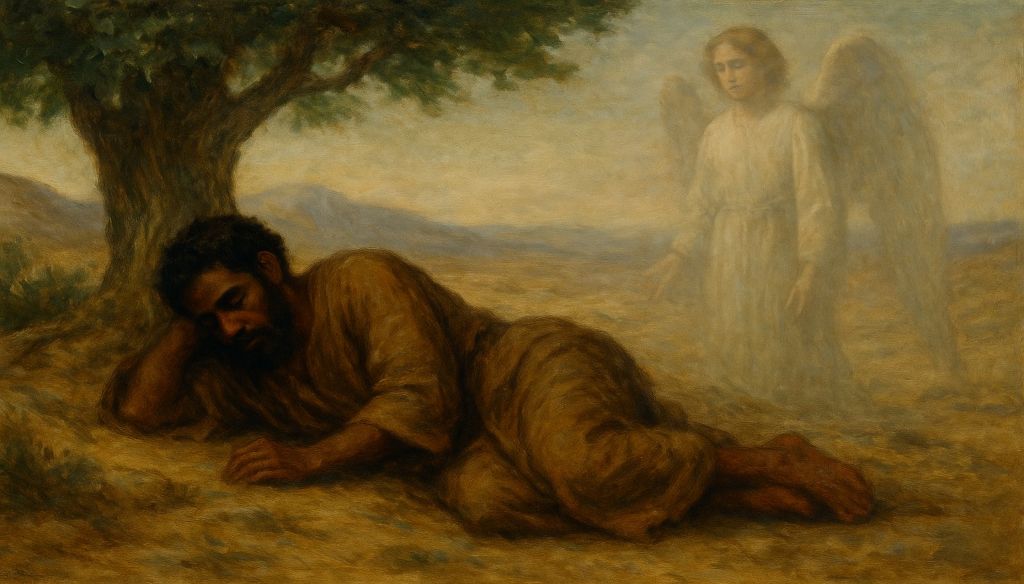
Elijah wasn’t just afraid. He was exhausted. Sitting under a juniper tree, he said, “It is enough… take away my life.”

Anxiety doesn’t always roar. Sometimes it whispers, “I can’t do this anymore.”


II. The God Who Meets You Under the Tree

God didn’t meet Elijah with a rebuke. He met him with rest.

1 Kings 19:5 says:

“As he lay and slept under a juniper tree, behold, then an angel touched him, and said unto him, Arise and eat.”

He didn’t send a sermon. He sent a meal and a nap.

Sometimes the most spiritual thing you can do is rest. Sometimes the most divine answer to anxiety is not a miracle but gentle care; a warm meal, a moment of stillness, the touch of Heaven through something ordinary.

And God didn’t just do it once. He came again. (1 Kings 19:7)

“Arise and eat; because the journey is too great for thee.”

God knows what the journey has taken from you. He sees the toll it’s left on your mind and your spirit. And He comes not to shame you for collapsing, but to strengthen you to continue.


III. The Invitation to Be Honest and Still Be Held

Elijah’s prayer wasn’t polished. It wasn’t faith-filled. It was raw.

“Take away my life.”

Have you ever prayed something messy? Something desperate? Something you weren’t even sure was okay to say to God?

God is not afraid of your honesty.

You can pour out your anxiety. You can collapse under a tree. You can tell Him you’re done, and He will still feed you, still sustain you, still call you forward.

God didn’t answer Elijah’s request to die. He answered the need beneath the words: the need for reassurance, for presence, for strength.

Anxiety didn’t disqualify Elijah. And it doesn’t disqualify you.


Application: When You’re Under Your Juniper Tree

  1. Admit the Crash
    You don’t have to pretend to be strong all the time. Elijah didn’t. Admit when you’re overwhelmed.
  2. Receive Heaven’s Touch
    Ask God for rest, nourishment, and strength. You don’t have to “feel spiritual” to be met by Him.
  3. Refuse the Lie of Disqualification
    God didn’t cancel Elijah’s calling. He simply paused the pace. Your struggle is not the end, but it is an invitation to go deeper with God.

💭 Reflection Question

Are you sitting under your own Juniper tree today, feeling tired, anxious, or ready to give up? What would it look like to let God meet you right there?


🙏🏽 Prayer

Heavenly Father, You see the places in me that are tired and trembling. Like Elijah, I have moments where fear speaks louder than faith. But You are the God who meets me under the tree. Feed my spirit. Calm my mind. Strengthen my heart. Remind me that I am not alone, and that You are not done with me. In Jesus’ name, Amen.


Read More →

Part 2: Bread in the Wilderness

When Heaven Feeds the Anxious


Scripture Reference:

1 Kings 19:5–6 (KJV)“And as he lay and slept under a juniper tree, behold, then an angel touched him, and said unto him, Arise and eat. And he looked, and, behold, there was a cake baken on the coals, and a cruse of water at his head. And he did eat and drink, and laid him down again.”


Introduction: When You’re Too Tired to Pray

Beloved, there are moments in life when anxiety doesn’t just steal your peace, it steals your strength. When getting out of bed feels like a battle. When praying feels too heavy. When even your faith feels like it’s running on empty.

What do you do when your spirit is dry, your heart is weary, and your soul is crying out beneath the weight of life?

That’s where we find Elijah.

He had just come from a spiritual high on Mount Carmel, only to crash hard into fear and despair. He fled into the wilderness, collapsed under a broom tree, and begged God to take his life.

And what did God do?
He sent an angel, not to preach or scold, but to feed him.

Today, we’re exploring how heaven responds when we are at our lowest, and how God provides bread in the wilderness of our anxiety.


I. The God Who Sees the Exhausted

Elijah didn’t have words. He didn’t even have strength. He just lay down and slept.

But Scripture says:

“And behold, then an angel touched him…”

God knew exactly where Elijah had collapsed. He saw him beneath the tree. He watched him fall apart and still drew near.

Have you ever felt like no one sees your breakdown?

The missed calls. The silent sobbing. The overwhelming fatigue that nobody seems to understand.

God sees it.
And not only does He see, but you are not alone in that place.

Psalm 34:18 reminds us:

“The Lord is nigh unto them that are of a broken heart; and saveth such as be of a contrite spirit.”


II. The Bread of Grace, Not Performance

God didn’t say, “Elijah, get up and try harder.”
He said, “Arise and eat.”

This is grace.

The angel placed a cake baked on coals and a jar of water beside Elijah. Heaven’s answer to anxiety was not a lightning bolt, but it was breakfast.

You don’t have to perform to be fed. You don’t have to feel spiritual to be sustained.

Sometimes, God’s most powerful ministry in your life begins with simple, quiet acts of care. A song that plays at the right time. A phone call that lifts your head. A Scripture that finds you when you weren’t even looking.

God is not waiting for you to climb out of the pit before He comes close.
He steps into the pit. With bread. With presence.


III. The Second Touch: Healing is a Process

1 Kings 19:7 says:

“And the angel of the Lord came again the second time…”

God touched Elijah once, then let him rest again.
Healing doesn’t always happen in one touch. Sometimes it takes a second and a third.

Your recovery doesn’t have to be rushed.
You are allowed to heal in stages.

The first touch was nourishment.
The second was strength for the journey ahead.

God knows how to walk with you through your wilderness without pressure, and with patience.


Application: Receiving Heaven’s Bread in Anxious Seasons

  1. Rest Is Not Rebellion
    It’s okay to pause. Elijah slept. Twice. God didn’t rush him. He restored him.
  2. Watch for the Angel Moments
    God often sends people, songs, or Scriptures like “angels with bread.” Stay open to the quiet ways God is feeding you.
  3. Don’t Rush the Process
    Healing doesn’t always happen instantly. Trust that God’s timing is not neglect; it’s nurturing.
  4. Feed Daily, Not Just on Mountaintops
    Don’t wait for spiritual highs to nourish your soul. Receive God’s bread daily in His Word, in worship, in silence.

💭 Reflection Question

Have you accepted God’s rest and nourishment in this anxious season, or have you been pressuring yourself to “get over it”? What if healing begins with simply receiving?


🙏🏽 Prayer

Father, I am tired. Like Elijah, I have moments where I lay down in the wilderness and wish I could quit. But thank You that You send bread and water, not judgment. Thank You that You feed me even when I’m weak. Teach me to receive rest without guilt and to recognize Your gentle provision. Strengthen me with the Bread of Heaven. In Jesus’ name, Amen.


Read More →

Part 3: The Whisper and the Mission

When God Speaks to the Anxious Soul


Scripture Reference:

1 Kings 19:12 (KJV)“And after the earthquake a fire; but the Lord was not in the fire: and after the fire a still small voice.”


Introduction: What Happens After the Breakdown

Beloved, have you ever made it through the darkest night, only to wake up unsure of what comes next?Anxiety doesn’t always disappear after one prayer or one breakthrough. Even when the crying stops, the questions remain. What now? Am I still usable? Can I still hear God?

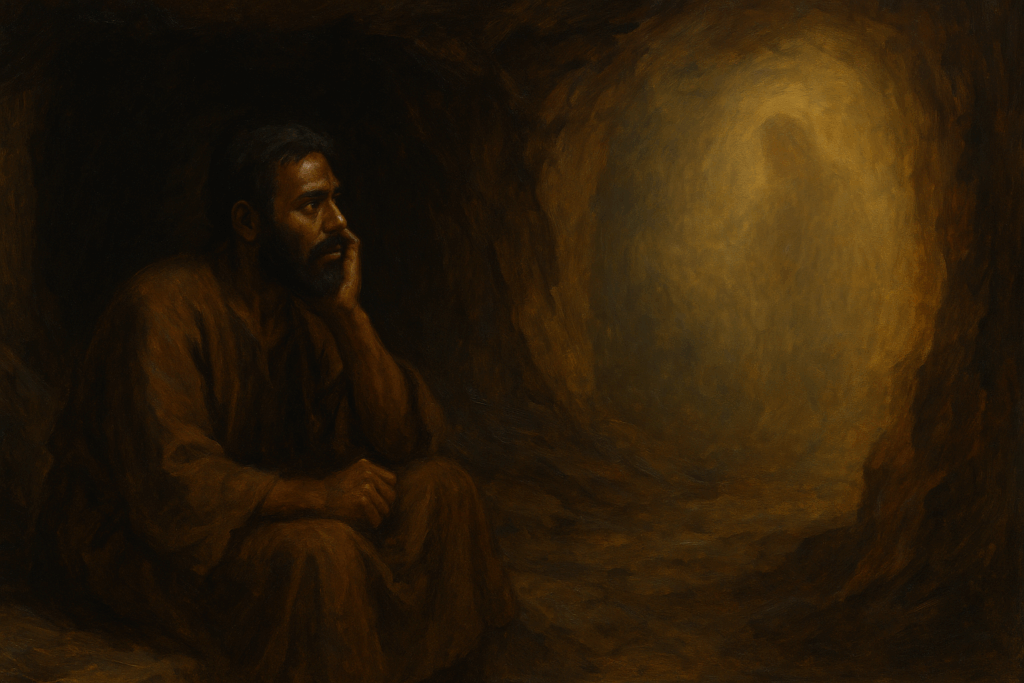
Elijah had been fed. He had rested. But the journey wasn’t over. He traveled 40 days and nights to Mount Horeb, the same mountain where Moses met God. There, in the solitude of a cave, Elijah poured out his heart again. And it was there, not in fire or wind or earthquake but in a whisper that God spoke. Today, we will walk through how God speaks in the aftermath of anxiety and restores us with purpose.


I. The Gentle Voice That Follows the Storm

Elijah had seen God move with fire. He had watched heaven shake the skies.But now, God teaches him something deeper:

“The Lord was not in the wind… nor the earthquake… nor the fire… but in a still small voice.” — 1 Kings 19:11–12

God wasn’t louder. He was closer.

Sometimes we expect God to show up with force to break our fear with noise. But when your heart is fragile, He often speaks in a whisper. Why? Because a whisper means He’s near.

Are you straining to hear God in the chaos? Sometimes the key is not more volume it’s more stillness. In your anxiety, God may not shout over the storm. He may just sit beside you and whisper truth.


II. The Honest Cry God Still Answers

Elijah repeats his earlier lament:

“I have been very jealous for the Lord… and I, even I only, am left…” — 1 Kings 19:14

It’s the same complaint he gave before the rest and the bread. Nothing had changed, except Elijah’s posture. God didn’t rebuke him for repeating himself. He allowed Elijah to voice the pain of isolation and the fear of irrelevance. And then He answered, not with pity, but with perspective.

“I have left me seven thousand in Israel…” — 1 Kings 19:18

Elijah felt alone; but he wasn’t.
He felt finished; but God still had work for him.

You may feel like you’re the only one holding on, the only one trying, the only one still believing, but you’re not as alone as you feel. God sees the bigger picture you can’t. He hasn’t just preserved you. He’s preserved others, opportunities, and assignments that you haven’t seen yet.


III. The Mission that Still Stands

After the whisper, God gives Elijah a new assignment:

“Go, return on thy way… anoint Hazael… anoint Jehu… and Elisha shall thou anoint to be prophet in thy room.” — 1 Kings 19:15–16

Elijah’s journey wasn’t over. It was redefined. God gave him direction. He gave him a successor. He gave him purpose again. Anxiety may sideline you for a season, but it doesn’t disqualify you. Your cave isn’t your coffin. Your wilderness isn’t your end. When God speaks, He doesn’t just heal you, He sends you.


Application: Listening for the Whisper, Living in the Call

  1. Make Space for Stillness
    Don’t rush past the quiet moments. Sometimes God’s greatest clarity comes in silence, not noise.
  2. Don’t Be Ashamed to Repeat Your Hurt
    God isn’t annoyed by your honest prayers. He listens, again and again, and responds with compassion and clarity.
  3. Embrace the New Mission
    Just because things changed doesn’t mean your calling has ended. It may look different, but you’re still anointed.

💭 Reflection Question

Are you listening for God in the loud places only, or are you willing to be still enough to hear the whisper? What “next” might He be preparing you for, even in this season?


🙏🏽 Prayer

Lord, thank You that You whisper when I’m too fragile to endure more shaking. Help me recognize Your voice, not just in the fire, but in the quiet. Heal my anxious soul, and open my ears to hear You again. I receive Your restoration, and I’m ready to walk in the next thing You’re calling me to. In Jesus’ name, Amen.


Read More →

You’re Not the Only One: When Anxiety Lies

Exposing the Isolation That Comes with Emotional Exhaustion

1 Kings 19:14, 18 (KJV)
“I, even I only, am left; and they seek my life, to take it away… Yet I have left me seven thousand in Israel, all the knees which have not bowed unto Baal.”


Have you ever felt like you were the only one struggling? The only one who’s tired of pretending.
The only one who prays but still feels overwhelmed. The only one whose mind won’t rest even when everything looks okay on the outside.

That’s one of anxiety’s most destructive lies: “You’re alone in this.” And perhaps the hardest part is, when anxiety is loud, that lie feels like truth. You look around, at church, on social media, even in your own home, and everyone seems fine. Strong in fact; Whole. Meanwhile, you’re barely holding it together.

That’s exactly where we find Elijah. Yes, Elijah, the prophet of fire, the one who prayed down rain and called down flames. After his showdown on Mount Carmel and his escape from Jezebel, Elijah ends up in a cave, drained and done. And when he opens his mouth, here’s what he says:

“I, even I only, am left…”

It wasn’t just fear speaking. It was isolation. It was anxiety doing what anxiety does best: cutting you off from hope by convincing you you’re the exception.

But God answered him with gentle truth:

“I have left me seven thousand…”

Seven thousand people who were still faithful. Seven thousand people Elijah couldn’t see.
Elijah felt alone, but he wasn’t. And neither are you.


Anxiety Sounds Like Certainty

Elijah didn’t ask if he was alone. He declared it. That’s how anxiety creeps in, it doesn’t whisper “maybe.” It shouts “always” and “never.” It deals in extremes.

  • “No one understands me.”
  • “Everyone else is stronger.”
  • “I’ll never get through this.”

But beloved, your feelings, while real, are not always true. God sees what you can’t. He sees the 7,000 in your future, the quiet friends, the surprising support. The divine encouragement waiting just beyond this season.


You’re in Good Company

You’re not the first to feel this way. Elijah wasn’t the only servant of God who collapsed under emotional weight.

  • Moses asked to die in the wilderness.
  • David wrote psalms soaked in tears and anguish.
  • Jeremiah cursed the day he was born.
  • And Jesus (yes, even our Saviour) said in Gethsemane, “My soul is exceeding sorrowful, even unto death.”

You are not the anomaly. You are not the weak one. You’re human, and you’re in good company.
God didn’t abandon them, and He won’t abandon you.


God Knows the Ones You Can’t See

Elijah didn’t know the 7,000 existed, but God did. And when the time was right, God didn’t just tell him about them, He connected him with Elisha, the one who would walk with him to the end. You may feel hidden, but you are not forsaken. God has relationships, divine alignments, and timely encouragement waiting in the wings.

Ask Him to show you the “Elishas.” Pray for eyes to see who’s still standing with you, even if they’ve been quiet in the background.


Healing Starts with the Whisper

God didn’t shout Elijah out of his anxiety. He didn’t shake him with force. He whispered.
And in that whisper was truth.

The lie said: “You’re alone.”
The whisper said: “I’m here. And you are not the only one.”

And maybe today, God is whispering to you through these very words. Maybe this message is your reminder that you are still seen, still surrounded, and still safe in God’s hands.


You’re Not the Only One

Not the only one battling panic in silence.
Not the only one reading Scripture with trembling hands.
Not the only one crying after the crowd leaves.
Not the only one thinking you’re the only one.

You are not the only one.
And that’s not a small truth; it’s a life-saving one.


🙏🏽 Prayer

Father, when my fears grow louder than my faith, remind me of the 7,000. Remind me that I am not the only one, and I never have been. Speak truth to every lie that anxiety has planted in my mind. Whisper peace where there’s been panic, and light where there’s been darkness. Thank You for never leaving me alone, even when I feel like I am. In Jesus’ name, Amen.


Read More →

How God Recommissions the Anxious and Wounded


Scripture Reference:

1 Kings 19:15–16 (KJV)

“And the Lord said unto him, Go, return on thy way… and Elisha… shalt thou anoint to be prophet in thy room.”


When You’ve Decided It’s Over, But God Hasn’t

Beloved, have you ever been so weary that you mentally closed the chapter before God did?

You were ready to shut the door on that dream, to resign from that ministry or to walk away from your purpose. Not because you don’t love God, but because you were just done. Elijah had reached that place.

Under the juniper tree, he prayed a desperate prayer:

“It is enough; now, O Lord, take away my life.”

This wasn’t a dramatic outburst. It was the genuine cry of a soul that had given everything it had, and still felt like it had failed. Elijah believed he had come to the end of his usefulness. But while Elijah was preparing for closure, God was preparing for a continuation.


God Doesn’t Conclude Where You Collapse

When Elijah said, “I’m done,” God didn’t respond with, “Okay, let’s wrap this up.”

Instead, God said: “Go… return on your way.” In other words: “I still have plans.” That’s the heart of God for the anxious, the broken, the burned out. He doesn’t discard you when you collapse. He doesn’t retire you when you’re discouraged. He revives you, then redirects you. The cave may have felt like a grave, but it was actually a doorway.


Purpose Doesn’t Expire in the Wilderness

Elijah wasn’t just preserved, he was recommissioned. God didn’t simply soothe him with food and silence. He gave him specific next steps:

  • Anoint Hazael as king.
  • Anoint Jehu.
  • Raise up Elisha.

These instructions were not random. They were kingdom assignments. Strategic, necessary and divinely appointed.

And here’s the lesson:
Your low point doesn’t eliminate your high calling.

Even after anxiety.
Even after breakdown.
Even after saying, “I can’t do this anymore.”

God says, “Yes, you still can. With Me.”


From Rejection to Reinvestment

Elijah felt rejected by his people, isolated in his call, and worn thin by the pressure. But part of his healing came through a new connection, Elisha. God didn’t just restore Elijah’s purpose; He gave him someone to walk with, someone to train, someone to share the burden.

Sometimes the next step isn’t just another task; it is a relationship, a divine partnership that lightens your load and breathes new life into your calling.


When You Think It’s Over… Ask God Again

Maybe you’ve been quietly telling yourself:

  • “My time has passed.”
  • “I missed my moment.”
  • “I’m too broken to continue.”

But the whisper of God is coming into your cave, gently saying: “Go, return… I still have work for you to do.” Don’t measure your future by your feelings. Measure it by God’s assignment. And if He’s not finished, you’re not finished.


💭 Reflection Question

Have you been trying to retire from something God still wants to resurrect? What assignment might still be waiting for you on the other side of your cave?


🙏🏽 Prayer

Father, thank You that my weariness doesn’t cancel my assignment. When I feel too broken, too tired, or too disqualified, remind me that Your plans still stand. Breathe new strength into me. Give me direction. Show me the Elishas You’re sending. I believe You still have work for me to do. In Jesus’ name, Amen.


Read More →


Key Scripture:

“This is the day which the Lord hath made; we will rejoice and be glad in it.”
Psalm 118:24 (KJV)


Introduction

Beloved, today we are going to unpack one of the most overlooked blessings we often miss: the present moment.

We are often caught between two strong forces:

  • The pull of the past, filled with regrets, shame, and nostalgia.
  • The pressure of the future, filled with anxiety, ambition, and uncertainty.

But what if I told you that God moves most powerfully not in the “what was” or “what might be,” but in the “what is”?

Today’s message is titled “The Gift of Now: Living Fully in God’s Present.”


1. The Present Is a Divine Gift

The word “present” is a reminder that it is a gift.

“Give us this day our daily bread.”
Matthew 6:11 (KJV)

God designed life to be lived one day at a time. He provides for today. Not tomorrow’s strength and not yesterday’s mercies, but today’s provision.

When we live fully present, we walk in rhythm with God’s grace. Lamentations 3:23 says:

“His mercies are new every morning.”

Each day is a reset. Each moment brings a fresh outpouring. Why? Because God does not recycle mercies. He custom makes them for today.


2. Jesus Valued the Moment

Look at how Jesus lived.

He was never in a rush. Yet, He was never late.

  • He paused to speak with the woman at the well.
  • He noticed Zacchaeus in the tree.
  • He wept with Mary and Martha.
  • He touched the leper when others passed by.

Jesus was always present.

He was not distracted. He was not preoccupied with tomorrow’s cross while healing today’s wound. He fully lived each moment as sacred.

We must learn to do the same.


3. The Present Represents Trust

Living in the moment is not laziness. It is trust.

“Take therefore no thought for the morrow: for the morrow shall take thought for the things of itself.”
Matthew 6:34 (KJV)

Jesus is not saying to be careless. He is saying to be filled with faith.

When we stress about the future, we are saying, “God, I’m not sure You’ll be there.”

When we dwell in the past, we are saying, “God, what You did wasn’t enough.”

But when we embrace today, we say,
“God, I trust You now. I trust You here. I trust You fully.”


4. The Present Is Where God’s Presence Dwells

God’s name is “I AM,” not “I WAS” or “I WILL BE.”
He is the ever-present help in time of trouble.
Psalm 46:1

To meet God, you do not have to look behind or peer ahead. You only need to be still and know that He is God — right here, right now.

Your healing starts today.
Your forgiveness is available now.
Your peace begins this moment.

“Behold, now is the accepted time; behold, now is the day of salvation.”
2 Corinthians 6:2 (KJV)


5. The Dangers of Missing the Present

When we refuse to live in the moment:

  • We miss the beauty of God’s daily blessings.
  • We develop a heart of complaint instead of contentment.
  • We chase imaginary futures and become discouraged.
  • We ignore the people God has put in our path today.

Remember Martha in Luke 10. She was so busy trying to serve Jesus that she missed sitting at His feet.

Jesus said,

“One thing is needful. Mary hath chosen that good part.”
Luke 10:42

Mary chose the present.


6. How to Live in the Present Spiritually

Here are 3 practical and biblical ways to stay rooted in the now:

a. Practice Gratitude

“In every thing give thanks…”
1 Thessalonians 5:18
Notice what is around you and thank God for it — breath, people, provision, peace.

b. Slow Down and Listen

“Be quick to listen, slow to speak…”
James 1:19
Pause long enough to hear God in the silence and your neighbor in their need.

c. Walk with the Spirit

“If we live in the Spirit, let us also walk in the Spirit.”
Galatians 5:25
Walking implies step-by-step obedience, not sprinting toward the future.


Conclusion: God Meets Us in the Now

Beloved, do not let the present pass you by while waiting for a perfect moment.
This is the moment.
This is the day.
This is where God’s light shines brightest.

Let the words of Psalm 118:24 anchor your heart:

“This is the day which the Lord hath made; we will rejoice and be glad in it.”

Not yesterday.
Not tomorrow.
Today.
Now.

Let us rejoice not because everything is perfect, but because God is present.


Prayer

Lord, teach us to number our days, that we may gain a heart of wisdom. Help us to appreciate the beauty of now. Let us not be trapped in what was or worried about what will be. Meet us here. Heal us here. Use us now. In Jesus’ Name, Amen.


Would you like a downloadable version, or should we turn this into a WordPress blog post draft for Light of Life?

Read More →


Proverbs 3:5–6 (KJV)
“Trust in the Lord with all thine heart; and lean not unto thine own understanding. In all thy ways acknowledge Him, and He shall direct thy paths.”


Introduction

Church, today we’re talking about a tension we’ve all felt deep in our hearts:
“Lord, I want to trust You, but I need to see something first!”

From the beginning of time, humanity has operated with the mindset:

“If You show me, then I’ll believe You.”
But the Kingdom of God flips that idea completely:
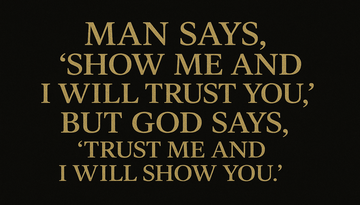
“If you believe Me, I will show you.”

Man’s logic demands proof before trust.
But God’s Kingdom demands trust before revelation.
God doesn’t work by the world’s contracts — He works by covenant.


1. The Pattern of the Flesh: “Show Me First”

This mindset is ancient. In fact, it started in the Garden of Eden.

  • Eve didn’t trust God’s command …she wanted to “see” for herself.
  • Israel at the Red Sea …cried out in fear before God parted the waters.
  • Thomas, the doubting disciple, said in John 20:25, “Except I shall see in his hands the print of the nails… I will not believe.”

This is human nature:

  • We want signs before surrender.
  • We want evidence before obedience.
  • We want God to move before we take a step.

But church, this is not faith …it’s fear in disguise.


2. The Principle of the Kingdom: “Trust First”

In the Kingdom, faith always precedes sight.

  • Hebrews 11:1 says, “Now faith is the substance of things hoped for, the evidence of things not seen.”
  • Jesus said to Thomas, “Blessed are they that have not seen, and yet have believed.” (John 20:29)

Think of Abraham:

  • God told him, “Leave your country… go to a land I will show you.” (Genesis 12:1)
  • God didn’t give him a map… just a promise.

God says:

“Trust Me with your yes, and I will give you the what, where, and how.”

Faith is not about understanding everything, it’s about trusting God with everything.


3. Faith is the Currency of Heaven

In the world, we use dollars to transact.
In the Kingdom, we use faith.

Without faith, nothing moves:

  • Hebrews 11:6: “But without faith it is impossible to please God.”
  • God isn’t looking for our plans …He’s looking for our belief.

Many of us are stuck because we’re waiting on God to “show” us something He’s already told us.
But God is saying:

“I’m not going to show you the next chapter until you step into the first word I already gave you.”


4. Trust Activates the Supernatural

Let’s look at the pattern of miracles in Scripture:

  • The woman with the issue of blood …she trusted Jesus’ power before He ever acknowledged her.
  • Peter walked on water only after he stepped out of the boat.
  • The walls of Jericho didn’t fall before they marched… they fell after obedience.
  • The loaves and fish multiplied after they were placed in Jesus’ hands.

Every time God moved miraculously, it was faith that unlocked it, not sight.


5. Why Does God Want Trust First?

Because trust is relational, not transactional.

God is not a vending machine …He’s a Father.
He doesn’t want you to treat Him like a genie.
He wants to walk with you, grow you, and reveal Himself in layers, not just in lightning bolts.

Sometimes God delays the evidence so He can develop our faith.


6. What Happens When You Trust First?

“Trust Me, and I will show you…”
God will show you:

  • His faithfulness when others walk out.
  • His provision when the bank account says zero.
  • His healing when the doctors say it’s over.
  • His power when you feel weak and overlooked.
  • His presence when you feel alone.

God doesn’t just reward trust …He honors it.


Application: How to Live This Out

  1. Start trusting without all the answers.
    You don’t need the full plan …just the next step.
  2. Declare war on doubt.
    When fear whispers “What if?”, respond with “Even if!”
  3. Remember past faithfulness.
    If He did it before, He’ll do it again.
  4. Get rooted in the Word.
    Faith comes by hearing ..not just podcasts or people… but hearing the Word of God (Romans 10:17).

Closing

Church, listen carefully:

  • The world says, “I’ll believe it when I see it.”
  • But the Lord says, “You’ll see it when you believe it.”

Today, God is calling us back to childlike faith … the kind that believes even when it doesn’t make sense.

Don’t wait to see it …trust God and step out.

Because when you trust Him, you won’t just see miracles —
you’ll become one.


Let us pray:

“Father, give us the courage to trust before we see.
Help us walk by faith and not by sight.
Make us people who believe Your Word, even when our eyes don’t yet see the outcome.
We declare today: we trust You — and we know You will show us.
In Jesus’ name. Amen.”

Read More →

How & Why Should We Pray?


Finding God Within and Building the Inner Self


Introduction: God’s Presence in Us

Many people imagine prayer as speaking upward to a faraway God, hoping He hears. But for those who have come to faith in Christ, the Bible paints a radically different picture. God is not far off. He is not waiting at some cosmic distance for you to find the right words to “reach” Him. Scripture tells us something much more personal: He lives within you.

1 Corinthians 3:16 asks us directly, “Do you not know that you are God’s temple and that God’s Spirit dwells in you?” And Colossians 1:27 speaks of “Christ in you, the hope of glory.” That’s not poetry; it’s reality.

This means prayer is not about sending words through the air to find God. It’s about quieting the noise, turning inward, and tuning in to the Spirit who is already present. The God who created the universe has chosen your heart as His home. When we pray, we are not trying to convince God to come to us — we are awakening to the fact that He’s already here.

When we pray in this way, it does more than “check a spiritual box.” It shapes us. It makes us more aware of His voice, more settled in His peace, more aligned with His heart. And the more we pray, the more our inner life grows strong and steady.


Part 1: Why Should We Pray?


1. Because Jesus Modeled It

Luke 5:16 tells us, “But Jesus often withdrew to lonely places and prayed.” Think about that: the Son of God, who lived in constant connection with the Father, still made prayer a daily priority.

If Jesus, who was already perfect, took time to intentionally be alone with God, what does that say for us? He wasn’t just setting an example — He was showing us the reality that even when God lives in you, communion is not automatic. It must be chosen. It must be practiced.

When you pray, you’re following the very pattern of Christ. And in doing so, you’re reminded that your spiritual growth won’t come from rushing or just “getting through the day.” It comes from those quiet moments where you stop, listen, and engage with God’s Spirit within you.


2. Because Prayer Strengthens the Inner Life

Ephesians 3:16 says, “That He may strengthen you with power through His Spirit in your inner being.” This is exactly what prayer does.

Prayer is not just about asking for help when things go wrong — it’s about daily feeding your spirit so that when challenges come, you’re not scrambling for strength you don’t have. You’ve been building it all along.

When you pray, you are filling up your inner reserves. You are becoming less reactive to fear, less driven by worry, and more anchored in God’s peace. Just as the body needs food for strength, your soul needs prayer for spiritual endurance. Without it, the pressures of life will drain you.


3. Because God Invites Us into Ongoing Fellowship

1 Thessalonians 5:17 says simply, “Pray without ceasing.” This doesn’t mean we spend all day with our eyes closed and hands folded. It means we carry an open awareness of God’s presence throughout the day.

The Spirit in you is always ready to guide, comfort, and encourage — but often we’re too distracted to notice. Prayer, practiced regularly, makes that connection natural.

You don’t have to wait for a church service or a quiet morning at home to be with God. Because His Spirit is in you, every place becomes a prayer place — your car, your office, the grocery store.


4. Because Prayer Transforms Us from the Inside Out

Romans 12:2 tells us to be transformed by the renewing of our minds. Prayer is one of the key ways that renewal happens.

When you pray, you aren’t just “talking things out” — you are allowing the Spirit inside you to reshape your thoughts, your desires, and your perspective. Over time, the things that once controlled you — fear, resentment, insecurity — lose their grip, because the Spirit is teaching you to see through God’s eyes.

Prayer is God’s way of making sure change starts where it matters most — deep within your heart.


Part 2: How Should We Pray?


1. Be Honest with Yourself and with God

Psalm 62:8 says, “Pour out your hearts to Him.” Since God’s Spirit lives in you, He already knows what’s going on in your heart. Pretending or performing in prayer is pointless.

If you’re angry, say so. If you’re afraid, admit it. If you don’t understand what God is doing, tell Him. Honesty doesn’t push God away — it draws you deeper into His love, because He meets you in the truth.

When you are honest in prayer, you stop playing a role and start growing in real relationship.


2. Begin with Awareness of His Presence in You

John 14:23 says, “We will come to them and make our home with them.” Before you say anything in prayer, take a moment to remember that truth. God is already here.

Sometimes the most powerful prayer you can pray is not words at all, but a deep breath in His presence, letting yourself become aware of Him. This stillness opens your spirit to hear what God is already speaking within you.


3. Stay Persistent

Luke 18:1 tells us we should always pray and not give up. That persistence isn’t for God’s benefit — it’s for ours. Every time you return to prayer, you’re choosing connection over distraction, presence over busyness.

Over time, you’ll find prayer becoming less of a “task” and more of a natural part of who you are.


4. Align with God’s Spirit

Galatians 5:25 says, “Since we live by the Spirit, let us keep in step with the Spirit.” When you pray, let your requests and desires be shaped by God’s Spirit in you.

This means asking yourself, “Does what I’m praying reflect the heart of Christ?” Prayer becomes not just about asking God to change things for you, but about letting Him change you for what He’s called you to.


5. Live in a Way that Matches Your Prayers

James 1:22 tells us to not only hear the Word but do it. Prayer loses its power if we don’t live in agreement with what we pray.

If you pray for peace but constantly sow division, if you ask for strength but avoid responsibility, your prayers lose weight. When your life matches your prayers, your faith grows and your spirit stays aligned with God.


Part 3: What Happens When We Pray from the Inside Out?

  1. We Experience Peace — God’s Spirit settles our hearts even when the outside world is unsettled (Philippians 4:7).
  2. We Gain Clarity — We begin to recognize God’s voice and direction more clearly.
  3. We Build Spiritual Strength — Our inner life is renewed, and we become more resilient (2 Corinthians 4:16).
  4. We Live More Like Christ — As our inner life grows, it shapes our outward actions and attitudes.

Conclusion: Prayer as Inner Communion

Prayer is not about reaching up to a faraway God — it’s about engaging with the God who is already within you. It’s about letting His Spirit speak, guide, and transform you.

When we pray this way, we are not just speaking — we are listening, receiving, and becoming more like Him.

Practical steps:

  • Morning: Begin with prayer, meditation, and awareness, acknowledge God’s Spirit within yourself, before you speak to anyone else.
  • Midday: Take 60 seconds to pause, breathe, and realign your thoughts with Him.
  • Evening: Reflect on where you saw His guidance in your day and thank Him.

Final Verse: “Christ in you, the hope of glory” (Colossians 1:27).
When you pray, you are not calling for God to come closer — you are becoming more aware of the One who has never left.


Read More →

He Wants A Relationship With You

Is there such a thing as unconditional love? I used to wonder about that. Then I became a mom, and suddenly I understood something no book or sermon had ever explained. There is nothing quite like seeing a tiny human light up simply because you walked into the room. They don’t care that you pay the bills or stretch the budget or sacrifice sleep. They don’t care that you don’t always have it all figured out. They just see you, and their whole face beams. Even when you try to sneak out of the living room for a moment, they look at you with those puppy dog eyes that say, “Please stay.” It is a small, holy miracle every time.
And yet, there is a part of me that thinks, “Maybe this is because they are still young. They don’t know everything.” They haven’t seen the moments I lost my temper with my pharmacist 🙈. They haven’t heard the lies I told. They don’t know the times I took something that wasn’t mine or said something I wish I could take back. They don’t know the versions of me that I would rather leave buried in yesterday.
But God does. And that is what anchors me.
There is not a single thing about me He has not considered. Not one bad decision. Not one shameful chapter. Not one moment I would prefer to hide under the rug. He has seen it all, and still He says, “I want you.” That is what makes His love feel like oxygen on the days I can barely breathe. My kids love the version of me they know. God loves the version of me He knows completely.
So let me ask you gently, right here where you are:
What is that one thing you hope nobody ever finds out? The secret you pray never surfaces? Addiction? A choice you wish you could undo? Something you said or did that still stings when you think about it?
He already knows.
And He still wants you. That is the good news we often forget. We are in a season where God is stretching out His hand, not cautiously, but confidently, unapologetically, saying, “Come. Let’s walk this out together.”
All He desires is relationship.
And honestly? That is the safest, kindest place any of us could ever begin again.
Read this Scripture: Psalm 139:1-4

Read More →

Ruined For His Glory

𝐍𝐞𝐡𝐞𝐦𝐢𝐚𝐡 𝟏:𝟑 (𝐍𝐈𝐕)
“The wall of Jerusalem is broken down, and its gates have been burned with fire.”

When Nehemiah heard about the state of Jerusalem, he broke down. The walls were destroyed, the gates were in ashes, and the whole city was a shadow of what it once was. But for Nehemiah, Jerusalem was never just a city. It was a symbol and a mirror of the spiritual condition of God’s people. He wept, overwhelmed at how something once so sacred could fall into such disrepair.

Honestly, I chuckled a little and thought: If Nehemiah saw the state of today’s temple he might just have a second meltdown.

But here’s the beautiful truth I’m learning:
God doesn’t only move after the rebuilding; He moves even in the rubble. Yes, He promised beauty for ashes, but He also moves in the ash-covered, battle-torn ruins. He doesn’t wait for you to be polished and whole. He’ll meet you right in the debris.

Have you ever heard of the Wailing Wall, the Western Wall in old Jerusalem?
It’s a remnant, just a supporting wall left behind when the Second Temple was destroyed. By definition, it is a ruin. And yet… it’s one of the most visited, prayed-over, tear-soaked places in the world.
What would have made Nehemiah mourn in his day has become a global symbol of hope in ours.

And it made me wonder:
Do you still believe God can’t use you because you’ve been cracked open by life? Because trauma tore through your soul like fire through ancient gates?
But if God still draws nations to pray at a broken wall, why would He abandon a broken you?

Even now, I’m listening to “Glorious Ruins” by Hillsong. The title alone confused me at first, how can ruins be glorious?
But ruins carry memory.
Ruins stand as monuments to what survived.
They whisper, “Something tried to destroy me… and failed.”

You are still here. Maybe not standing the way you used to, but standing nonetheless. And that’s glory.

People will mourn your ruins before your funeral. They’ll write your eulogy while you’re still breathing. But beloved, let them talk. God isn’t finished. Just as tourists flock to ancient ruins, people will be drawn to the God who held you together through what should have broken you.

I’ve been called ruined. I’ve been counted out. But here’s my prayer: “Lord, if I am ruined, then let me be ruined for Your glory.”
Because in His hands, even ruins shine.

I am —
You are —
We are His glorious ruins.


Read More →
sermon date 2025-12-01

The Danger of Intimacy Outside of Covenant.

📖 “Amnon became so obsessed with his sister Tamar that he made himself ill. She was a virgin, and it seemed impossible for him to do anything to her.”
2 Samuel 13:2

🌿 I remember reading this story as a teenager. It used to be taught in youth groups as a warning against premarital sex, and rightly so. But there’s more to it.

What struck me then, and still haunts me now is this line:

“Then Amnon hated her with intense hatred. In fact, he hated her more than he had loved her.”
“Get up and get out!” he barked.

💔 But wasn’t she the one he claimed to love? Wasn’t she the one he couldn’t sleep without?

This is the heartbreak of a generation that confuses obsession with love; impulse with intimacy. And it’s costing us our wholeness.

🎯 Have you been trained to interpret your attractions?

We were made with layers; body, soul, and spirit. But the world has trained us to respond like we’re only flesh. So we treat every attraction like an invitation to act… and end up bound.

✨ Sometimes what you feel isn’t lust—it’s longing.
✨ Sometimes your soul recognizes a soul… not a spouse.
✨ Sometimes your spirit senses something divine… not romantic.

But when you lack discernment, you’ll mislabel the message and mishandle the connection.

🔍 Before you act, pause and ask:

  • What is my body saying?
  • What is my soul sensing?
  • What is my spirit witnessing?
  • And above all what does Scripture say?

Because attraction without discernment is a trap.
Impulse without insight breeds regret.

💡 I’ve learned hard lessons:
🧡 Love gives; lust demands.
🌼 Love builds; lust breaks.
🌟 Love fulfills; lust devours.

So now, before I move, I ask:

“Will I be proud of this decision later, or disappointed in myself?”

Beloved, God’s timing protects.
His boundaries are not punishments; they are preserves for your destiny.
His design heals. 💜

#LightOfLifeGlobal
#GenerationOfPurpose
#GuardYourDestiny
#ChooseWisdom
#HealingFromWithin
#SoulTiesUnraveled
#AmnonAndTamar

Read More →

God Knows Your Name

🕊️ DO YOU KNOW THE SWEETEST SOUND TO A PERSON IS THEIR OWN NAME? 🕊️

Even in sales, they teach you that. Learn the customer’s name, say it a few times, and suddenly walls start falling like Jericho with a smile 😃.

And honestly, I get it.

Because for years, I prayed the simplest, most childlike prayer:
👉🏽 “Lord, just say my name. Just once. Let me hear it in a way that tells me You really know me.

I prayed it through tears. Through confusion.
Through seasons where I felt invisible, even to myself.

💭 And somewhere along the way, that prayer shifted.
I started asking Him to do for me what He did for Abraham in Genesis 20, and for Jacob in Genesis 31.
I asked Him to speak to people on my behalf.
To defend me when I could not defend myself.

As women, there is a quiet longing in us:
💗 to be claimed
💗 to be spoken for
💗 to be fiercely loved

And I felt safe enough with God to say it.
The same way Moses once felt bold enough to say, “Show me Your glory.

I wanted that nearness. That assurance.
That voice that calls me by name.

✨ And then… God answered.

Not the way I had imagined, though.
Not in the dramatic, heavenly-audible way I secretly hoped for.
But in a way so personal to me.

📆 A few months ago, when I was admitted for surgery and everything went horribly wrong, I genuinely thought that might be the end.

The pain was unbearable.
And I was left wondering:
“God, do You remember me in this moment?”

And then suddenly
💬 messages started flowing in.
People I barely talk to.
Acquaintances in the faith, even leaders.

A woman of God said she literally saw me standing in front of her like a vision and felt she needed to reach out.

It was like something had stirred them.
Like something whispered my name in the spirit.

And here’s the part that broke me:

Every message began with my name.

🗣️ “Rutendo… are you okay?”
🗣️ “Rutendo… you came to my heart.”
🗣️ “Rutendo… I’m praying for you.”

The very thing I asked God for, He multiplied.

I asked Him to say my name once. He said it through the mouths of a dozen people, right when I thought I was forgotten.

🌌 After everything calmed down, God asked me something I will never forget:

“Would you rather I speak to your enemies to leave you alone, or would you rather I alert your friends to stand with you in prayer when you are in trouble?”

That hit me like lightning. The enemy will never admit that God warned them. They’ll never come up to you and say,

“Your God visited me last night. I’m terrified.”

They’ll act normal. Pretend nothing happened, meanwhile, Heaven has already spoken.

So never let the enemy trick you into thinking God does not know you.
Pay attention to the small ways He calls your name.

🌱 The subtle nudges.
📨 The unexpected text.
💭 The friend who dreams of you.
🙏🏽 The stranger who prays for you unprovoked.

These are the fingerprints of a God who knows you intimately.

I’ve learned that I am not just another voice in a crowded room to Him.
I am Rutendo. Simply, beautifully, completely Rutendo.

And He finds the most tender, surprising ways to show me…
He hasn’t forgotten my name.

Read More →

His Yoke is Easy and His burden is light

📖 “Come to Me, all you who are weary and burdened, and I will give you rest.”Matthew 11:28–29

I was reading this scripture yesterday, and something just hit me. You know when a verse suddenly feels like it’s reading you? 😂
That was me.

The last two and a half years…
Honestly, they’ve felt like I’ve been standing in the middle of a storm with no umbrella; just hoping I’d still be in one piece by morning. Every side of my life felt shaken.

But as I sat with that scripture, two things jumped out: ✍🏽 Jesus says His yoke is easy, and His burden is light.

And I thought — hold on
There’s still a yoke.
There’s still a burden.

Sometimes we act like coming to Jesus means everything becomes effortless, but that’s not what He said. What He did promise is this:

Whatever He places on your shoulders will not break you, because He carries it with you.

🕊️ That is the idea behind discipleship.

Yes, there is rest.
Yes, His love is gentle.
But there’s also a dying to self that isn’t always pretty. There is a pruning that stings before it heals. 😭
It’s not the burden of punishment; it’s the burden of purpose. You should see a learning opportunity in every life experience.

💡 And the yoke… that part humbled me.

A yoke was a wooden beam that tied two animals together so they could walk in rhythm under their master’s direction.

So when Jesus says, “My yoke,” He is essentially saying:

“Come walk beside Me. Move with Me. Let Me carry the weight you can’t. Learn My rhythm.”

That’s not slavery that’s partnership. That is relationship.

Looking back over these past years, I realise I didn’t survive because I was strong. I survived because I was tied to Someone stronger than the storm. I was yoked to the One who refuses to let go. 🙌🏽

And that’s why the burden felt lighter than it should have, not because it wasn’t real…
But because He was beside me the whole time.

So if you’re carrying something heavy today, maybe the miracle isn’t that the burden disappears.

🕊️ Maybe the miracle is that you don’t have to carry it alone.
Maybe the miracle is the quiet strength of knowing Christ is right there; Step for step
Taking the weight you weren’t built to bear.

🙏🏽 Lord, I thank You for Your invitation into a divine partnership.


Read More →
sermon date 05-12-25

🆃HE 🆂OUL CAN BE HEAVY SOMETIMES 😭

I once asked the Lord, “Why does anxiety and depression seem to be at an all-time high—even here in Africa where such things were once whispered away as ‘mental illness’?”
His response pierced my heart:

“Since the age of information, man no longer sees the need for Me.”

We can now diagnose ourselves online, find treatment without prayer, succeed without surrender, and boast in knowledge while starving in spirit.

Then the Lord added:

“I allowed the restlessness of the mind to remind humanity how empty life is without Me.”

That’s why billionaires, people with everything can still end their lives. Because everything without God is still nothing 💔
(Let that sit and marinate for a moment.)

Even in the Church, terms like depression and panic disorder are becoming alarmingly familiar. If you’re struggling mentally, don’t let religion shame you, let Jesus heal you.

🎶 “Jesus take over, I cannot do it by myself…” — Theophilus Sunday
That worship lyric has become my lifeline. Sometimes it’s not about being strong. It’s about surrendering to the One who holds your soul together.

We often say, “I can do all things,” but forget the crucial ending:

“…through Christ who strengthens me.” (Philippians 4:13)
And Jesus didn’t mince words:
“Without Me, you can do nothing.” (John 15:5)

So talk to Him, sis. Open up, my brother. He knows your pain, even the ones buried in your childhood. He doesn’t judge your tears, your numbness, or your panic.

Maybe you’re struggling to love your own child. Maybe you’re afraid of tomorrow. Maybe you’re so tired, even joy feels exhausting.

You’re not broken beyond repair.
You’re not alone.

🕊️ He is the Master at lifting burdens.

💬 Healing starts with honesty. Wholeness begins with Jesus.

#OutOfTheGrip #ConqueringAnxietyGodsWay #MentalHealthAndFaith #AfricanChristianVoice

Read More →